A Natural Approach to Root Canal Alternatives in Los Angeles

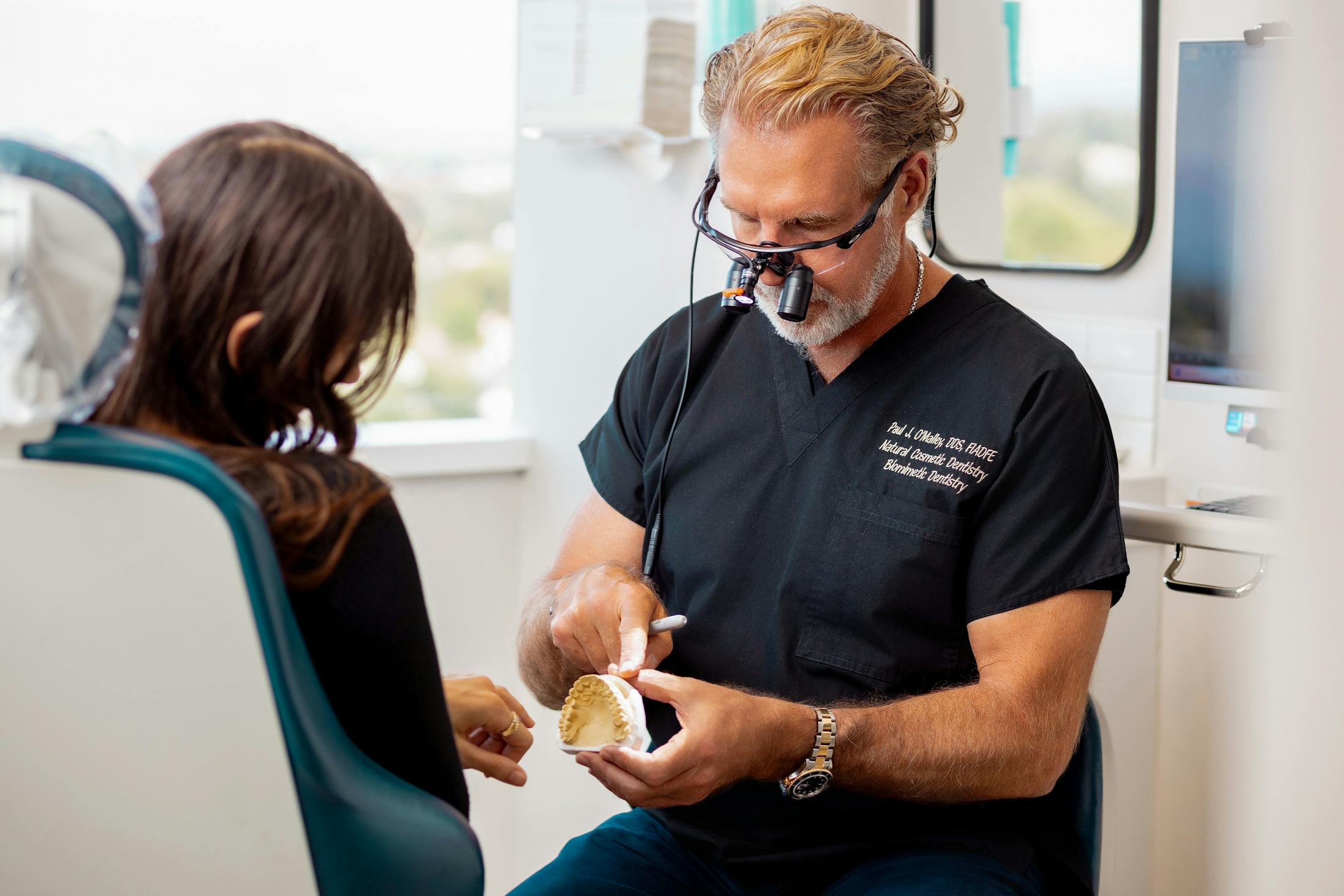
Dr. Paul O’Malley leads one of Los Angeles’ most advanced holistic and biomimetic dental practices. Based in Encino and serving patients across the greater Los Angeles area, he provides gentle, scientifically grounded alternatives to traditional root canals, helping patients protect the vitality of their natural teeth while supporting whole-body health.

For many, the idea of a root canal comes with anxiety or concern about long-term safety. At Dr. O’Malley’s practice, every case begins with one guiding question: Can this tooth be saved naturally?

Using advanced biomimetic and regenerative techniques, Dr. O’Malley often restores damaged teeth without the need for root canal therapy, avoiding unnecessary procedures while strengthening the natural foundation of your smile.

nurse working on patient

Why Patients Seek Root Canal Alternatives

Traditional root canal treatment involves removing the tooth’s pulp (nerve and blood supply) to eliminate infection, then sealing the hollow space with inert materials. While effective for pain relief, it can leave the tooth brittle and disconnected from the body’s natural system of healing and hydration. Common concerns with conventional root canals can include:

  • Loss of natural vitality within the tooth
  • Increased risk of fracture or failure over time
  • Potential for hidden bacterial infection inside sealed canals
  • Use of non-biocompatible materials or chemicals
  • Systemic health concerns for sensitive individuals

Dr. O’Malley’s approach is designed to address the root cause of infection while preserving the living structure and long-term integrity of the tooth whenever possible.


Background media

The Biomimetic Difference

Biomimetic dentistry is built on the principle of mimicking nature’s design: repairing teeth layer by layer to restore their original strength, flexibility, and function. Rather than removing the nerve, Dr. O’Malley uses advanced materials and techniques that allow the tooth to remineralize and heal naturally. Our biomimetic techniques include:

  • Targeted decay removal: Only the infected tissue is removed, preserving healthy dentin and enamel.
  • Adhesive layering: Restorations are bonded in thin, flexible layers that simulate real tooth structure.
  • Biocompatible materials: Mercury-free, BPA-free, and metal-free materials that integrate safely with the body.
  • Pulp capping and sealing: Protective methods that insulate the nerve and allow healing from within.
  • Ozone therapy and sterilization: Gentle antimicrobial treatments that eliminate bacteria without harming tissue.

This approach not only avoids root canals in many cases but also strengthens teeth to last longer than conventional restorations.

Banner media

Feel Confident in Your Smile Again

Schedule a Consultation
Contact us media

When a Root Canal May Be Avoided

Many patients are told they need a root canal when less invasive options are still available. Through detailed diagnostics, Dr. O’Malley can often identify when the tooth can be restored without removing its living tissue.

Conditions Where Alternatives May Be Possible:

  • Deep decay that has not fully reached the nerve
  • Cracked or fractured teeth with limited pulp exposure
  • Failed fillings that can be rebuilt using biomimetic bonding
  • Early-stage infection or inflammation of the pulp
  • Teeth weakened by grinding, clenching, or previous dental work

In each case, the goal is to preserve vitality, prevent reinfection, and restore natural function without over-treatment.

When a Root Canal Is Unavoidable

In situations where the tooth’s nerve is already dead or infected beyond recovery, a root canal, or in some cases, a biocompatible extraction and implant—may be necessary.
 Even then, Dr. O’Malley ensures the procedure follows holistic principles designed to protect your health and comfort.

If a Root Canal Must Be Performed:

  • GentleWave® technology is used to deeply cleanse and seal the canal system.
  • Biocompatible filling materials replace toxic or outdated substances.
  • Precision sealing techniques prevent reinfection and preserve bone health.
  • Long-term monitoring ensures that the restored tooth remains functional and safe.

At every step, Dr. O’Malley’s focus remains on minimizing invasiveness and maximizing preservation.

Background media

Holistic Considerations for Whole-Body Health

Because oral infections can affect the entire body, Dr. O’Malley’s restorative philosophy always takes systemic health into account. His approach supports the body’s natural balance by eliminating infection safely, minimizing toxicity, and preserving the integrity of the oral microbiome. Holistic safety measures include:

  • Avoidance of toxic sealants or medicaments
  • Use of ozone therapy and advanced sterilization
  • Safe replacement of old mercury fillings
  • Collaboration with biological physicians when appropriate

This integration of science and natural healing creates results that feel as good as they look: functionally, aesthetically, and biologically.

blue background image

Why Patients Across Los Angeles Trust Dr. O’Malley

With more than 30 years of clinical experience, thousands of restorations completed, and hundreds of full-mouth reconstructions performed, Dr. O’Malley is a leading authority in biomimetic and holistic dentistry. Patients come from Beverly Hills, Malibu, Santa Monica, Calabasas, and beyond for his proven ability to save teeth that others might extract or treat with conventional root canals.

Patients Choose Dr. O’Malley For:

  • Proven success in root canal-free restorative care
  • Decades of experience with biomimetic techniques
  • Advanced diagnostics and ozone-based sterilization
  • A calm, personalized, one-patient-at-a-time experience

His combination of expertise, empathy, and precision gives patients a clear path toward lasting comfort and natural preservation.

Banner media

Heal Naturally. Preserve What’s Yours.

You don’t have to choose between health and restoration. With Dr. Paul O’Malley’s holistic and biomimetic approach, you can protect your natural teeth for life without unnecessary root canals or aggressive treatments. Schedule your private consultation today at our office to explore your personalized root canal alternatives in Los Angeles & Encino, CA, and experience dentistry designed for long-term health and harmony.

Background media

If another dentist already told me I need a root canal, can that diagnosis actually be wrong?

It can be incomplete rather than wrong. A root canal is only truly required once the pulp is dead or infected beyond recovery, but many teeth are diagnosed at a stage where the nerve is inflamed rather than necrotic, and inflammation can resolve if the source of irritation is removed and the pulp is protected. Dr. Paul O'Malley's diagnostics distinguish between the two, and he frequently avoids root canals in cases of deep decay that has not reached the nerve, cracked teeth with limited pulp exposure, failed fillings that can be rebuilt with adhesive bonding, and early-stage pulp inflammation. Teeth weakened by grinding are also often restorable, sometimes alongside bruxism treatment to remove the underlying force. When the nerve is genuinely dead, no alternative preserves it, and he says so directly.

Why does a root-canal-treated tooth become brittle, and does a biomimetic restoration avoid that?

Conventional root canal treatment removes the pulp, which supplies the tooth with blood, nerve sensation, and internal hydration. Without that supply the dentin dries out and loses the flexibility that lets a natural tooth absorb chewing forces, so the tooth becomes more prone to fracture over time. It is also typically hollowed out and crowned, removing further structure. A biomimetic approach avoids this by keeping the pulp alive and rebuilding the tooth in thin bonded layers that flex the way real dentin and enamel do, the same principle used in holistic biomimetic restorations and onlays instead of crowns.

What is ozone therapy in dentistry and how does it replace the chemicals used in a standard root canal?

Ozone is used as a gentle antimicrobial: it disrupts bacterial cell walls and sterilizes the prepared tooth without the harsh medicaments and sealants conventional endodontics relies on, and without damaging surrounding healthy tissue. Dr. Paul O'Malley pairs ozone sterilization with pulp capping, which insulates the nerve with biocompatible material so the tooth can remineralize and heal from within rather than being emptied and sealed. All materials used are mercury-free, BPA-free, and metal-free, consistent with his broader holistic dentistry practice. Ozone reduces bacterial load but does not regenerate pulp that has already died, so it supports preservation rather than replacing treatment outright.

Is extraction and an implant a better choice than a root canal for someone concerned about hidden infection?

It is one legitimate option, but not automatically the better one. Patients concerned about bacteria persisting inside sealed canals sometimes prefer removing the tooth entirely, and Dr. Paul O'Malley performs biocompatible extraction followed by dental implants, including metal-free zirconia dental implants for patients avoiding titanium. The trade-off is real: extraction sacrifices a natural tooth root that no implant fully replicates, and it is a more invasive path than saving a vital tooth. That is why the sequence matters — preserve the living tooth if the pulp is viable, and consider extraction and implant when it is not.

What is GentleWave and when is it used instead of a conventional root canal technique?

GentleWave is a technology used when a root canal genuinely cannot be avoided, meaning the nerve is already dead or infected beyond recovery. It cleanses the canal system using fluid dynamics and acoustic energy rather than relying solely on mechanical filing, which reaches the small side branches and irregular anatomy conventional instruments often miss — the spaces where residual bacteria cause later reinfection. Dr. Paul O'Malley combines it with biocompatible filling materials in place of outdated substances, precision sealing to protect bone health, and long-term monitoring. Teeth treated this way often need coverage afterward, which he approaches through restorative dentistry that conserves structure, or as part of full mouth reconstruction in more extensive cases.

Accessibility: If you are vision-impaired or have some other impairment covered by the Americans with Disabilities Act or a similar law, and you wish to discuss potential accommodations related to using this website, please contact our Accessibility Manager at (818) 616-8838.
Contact Us